December 19, 2012

Book --> TV Show


HOW DID I MISS THIS?! SO EXCITED! I'LL BE USING ALL CAPS ALL DAY!

OK, not really. But I will be using them.

A LOT.

In semi-related news, Twitter's new embed comments feature is pretty rad, huh? :)

December 18, 2012

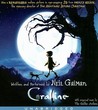
Book Review: Coraline

CoralineCoraline by Neil Gaiman

My rating: 4 of 5 stars


Precocious little Coraline Jones is an explorer. A bored explorer who goes investigating the building where she lives along with her rather inattentive parents and a few unique neighbors.

She discovers a door in her flat that leads to a brick wall. Or at least, it appears to lead to a brick wall. It actually leads to another world (or an "other" world, if you will), which contains slightly distorted replicas of everything in Coraline's world - an "other" house, "other" neighbors, and "other" parents. (The Other Mother might be one of the creepier concepts I've discovered in a children's story.) 

When Coraline returns home from her "other" world explorations, she soon discovers that her real parents are missing and is forced to return to the "other" world to save them.

Gaiman does his usual masterful job of characterization. And he writes it all very matter-of-factly from the child's perspective. There are some brilliant moments in the dialogue between Coraline and the cat. (Gaiman is well acquainted with cats, and it shows.) But my favorite line comes from Coraline herself toward the end of the story:

(view spoiler)[“I don't want whatever I want. Nobody does. Not really. What kind of fun would it be if I just got everything I ever wanted just like that, and it didn't mean anything? What then?”
 (hide spoiler)]


She's one smart kid. But that's what I love about her: she's smarter and less self-absorbed than all the adults in the book. And she doesn't need any help from them; it's quite the other way around. She's a true children's heroine.

I highly recommend the audio book, even if you've read the book or watched the movie - Gaiman is an amazing reader, and the rat songs that are included really add a whole new creep factor to an already creepy tale.


View all my reviews

December 7, 2012

Dear Universe


It's only been December for a week. My house is clean, my holiday shopping is done, our health and financial plans have been re-evaluated and re-upped, and we have solidified plans to get the tree and decorations taken care of this weekend.

But, no, I haven't shaved.

Thank you for sending that razor in yesterday's mail--it was just the subtle reminder I needed. Did my husband put you up to it?

December 6, 2012

Peepisms

Ciderman
My top five favorite Peepisms for the year:

 (1) Remope (Remote)
 (2) Hick up (Pick up) Truck
 (3) Mackey Oney (Macaroni) and Cheese
 (4) Gooble Gobble Guy (Green Goblin)
 (5) Ciderman (Spiderman)

August 5, 2012

My Tomboy Princess

Dora the Explorer started out simple - ugly purple shirt and orange pants. We used Netflix to give us never-ending and instantaneous access to all things Dora because Emma is obsessed.

So we've just hit some of the more recent episodes, and I've noticed a big change. Dora the Enchantress. Dora the Mermaid. Dora the Princess. Dora as whatever-will-warrant-Nickelodeon-putting-her-in-a-frilly-dress-with-a-crown. After a little research online, I've found that the new Dora won't be exploring the jungle or climbing mountains - she'll be shopping. Shopping. Dora the Accessorizer. I wanted to cry.

Here's the thing - I was certain sure I wanted a boy. A rough-and-tumble, curiosity-driven, I'm-dirty-and-it's-OK boy. Because I'm not comfortable with girly things. I don't shop unless I have to, and if it's clothes, maybe not even then. I don't know the first thing about makeup or fashion; I don't generally do well in malls or hair salons or anywhere you're expected to dress nicely and act appropriately (whatever that means). I was terrified.

And then I met Emma.

I fought the good fight  against the pink, frilly, lacy clothes and the bows and barrettes her grandmothers bought. I purposefully sought gender-neutral toys and refused to buy baby dolls. In the end, I lost these battles - all her dolls were at her grandmothers' homes, her closet was a solid Pepto spectrum, and her hands were always filled with purses and shopping bags.

But I won the war - Emma is into all those girly things, but she also likes playing with trains and cars. She knows as much about the Superhero Squad as she does Abby's flying fairy schoolmates. She examines how things work - cars, bikes, robots anything that moves - and fills her shopping bags with "tools" to help her fix things. The girl will dance around the house in her ballerina dress while wearing a pair of Converse sneakers and a Spiderman hoodie.


She's the best of both worlds. And the old Dora was, too. With this transformation, though, she's off the Netflix list. Carl and I have found some alternatives - The Magic School Bus is dated but better than most of the current shows, and we'll check out the new PBS show called Daniel Tiger's Neighborhood, fashioned after Mister Rogers' Neighborhood, when it airs.

Maybe one day it will be profitable for networks to come up with more than just stereotypical girl shows and boy shows. A mama can dream, anyway.

July 11, 2012

Book Review: Her Fearful Symmetry

Her Fearful SymmetryHer Fearful Symmetry by Audrey Niffenegger
My rating: 2 of 5 stars

Audrey Niffenegger builds fantastical situations from a perfectly normal, realistic foundation. In Her Fearful Symmetry, twin sisters Julia and Valentina inherit their dead aunt Elspeth's estate, including a London flat (apartment) that overlooks High Gate Cemetery. Their aunt's will stipulates that they must live in the flat at least one year before selling it and that their parents (Elspeth's twin sister Edwina and her husband, Jack) aren't allowed to step foot inside. Nothing strange there.

Except Elspeth is haunting her flat.

From there, the story goes into Elspeth's attempted communications with the living, how the living respond, and learning about the building's other residents. It was a very delicate ghost story, I suppose, and I loved the way Niffenegger described Elspeth's world once she was caught between the living and dead. I also loved the other building tenents - Elspeth's boyfriend Robert, who develops a thing for Valentina, and Martin, an OCD crossword creator, and his radio-personality wife, Marijke.

What I didn't love were the attempts at mystery: Why were Edwina and Elspeth estranged? Why didn't Elspeth want the twins' parents in her flat? What was the big secret about Elspeth that Robert didn't know? And what did Robert mean when he told Valentina that Elspeth wasn't really a nice person when she was alive? Didn't he love her? But the answers didn't offer any real revelations or surprises.

As Valentina became more and more obsessed with Robert and talking with Elspeth, Julia became rather boring to me. I felt like Niffenegger was looking for something for Julia to do, so she decided to pick one of the strongest characters in the book for the girl to visit: Martin.

And I fell in love with the quirky man and his wife.

Martin and Marijke's relationship became way more interesting to me than what the twins or Elspeth's ghost were doing. Martin and Marijke, their incredible love, his impossible sickness, and her unimaginable strength. Now there's the story I want to read. So while Her Fearful Symmetry was beautifully written and introduced some interesting thoughts about the spirit world, I was disappointed in the end.


View all my reviews

June 22, 2012

Book Review: The Horse Whisperer

The Horse WhispererThe Horse Whisperer by Nicholas Evans

My rating: 4 of 5 stars
(Originally read Sept. 6, 2004)

When my mother returned from the movie theater, raving about what a fabulous film The Horse Whisperer was and how she simply *must* read the book, all I could think was "Robert Redford... yuck!" It's not that Redford is a bad actor, rather that he appears in films that are too touchy-feely for my tastes. So for a long time I associated this book with the movie, assuming I would be no more interested in its story than I would a Redford film.

I was wrong.

This is perhaps one of the most beautiful books I've ever read. Nicholas Evans balances life's extremes perfectly in his less-than-perfect characters, and gives such vivid accounts of America's western frontier that it make me want to saddle up and ride to the other side of the Mississippi.

Young Grace Maclean and her steed, Pilgrim, are involved in an accident that leaves both horse and rider mentally and physically scarred. What follows is the gentle recovery of more than just those immediately involved in the accident -- Grace's parents, Annie and Robert, also undergo a healing process.

But Tom Booker, whose kind understanding of both horses and humans helps to mend the Maclean family's wounded relationships, finds himself in a difficult position. He and Annie are overcome by an undeniable attraction, and though their affair takes away from the healing focus of the story, I think it's appropriate for Evans to show that life goes on despite us and that new scraps and bruises are acquired, even as we lick our wounds.


View all my reviews

June 21, 2012

Book Review: The Paris Wife

The Paris WifeThe Paris Wife by Paula McLain

My rating: 4 of 5 stars


Ernest Hemingway was a brilliant shit.

I first encountered his works in college, and though they weren’t my cup of tea, I could appreciate their literary significance. But The Paris Wife is about Hemingway’s life before he became the world-renowned writer whose work is studied by students. It’s a fictional story that follows the true events of his life and tragic marriage to Elizabeth “Hadley” Richardson, Hem's first wife.

Told from Hadley’s perspective, the first part of the story is all about the couple — who they know, where they travel, what they do. I enjoyed Hadley as a narrator through these descriptions. She was steady and honest and so much more practical than the crowd she was running with. It’s perfectly boring, except for the colorful nicknames everyone has and a handful of interesting escapades.

But once they left Spain something happened. The situations Hadley and Ernest found themselves in were more volatile, more stressful, and yet our narrator was hardly emotional. She’d note her difference of opinion with Ernest and move on. No biggie. At first I couldn’t put my finger on this near ambivalence of hers, but once I figured out what was going on with Pauline, it genuinely pissed me off.

That Hadley didn’t cancel her vacation plans when she learned her friend was actively trying to steal her husband was outrageous. Her tolerance of Pauline’s intrusion was unthinkable, but the pseudo-friendship and delusional correspondence that continued was even worse. Hadley seemed to shrink into herself, and even after her accounts of the love triangles and destroyed relationships around her, she continued to tolerate Ernest and his other woman.

And Hem. Oh, Hem. The brief moments when he’s allowed to narrate were well-timed. Paula McLain must’ve known that he needed to defend himself, to speak up just a little and remind the reader that he was a troubled, sensitive soul, and that none of this was easy for him, either. But those brief jaunts into his perspective accomplished the opposite for me. What kind of delusional idiot was he? Was Pauline? Was Hadley for not sticking up for herself for crying out loud!

Hadley shows a little more emotion toward the end — she makes a few scenes, a few demands. She calls Pauline a whore, calls Hem a coward. But so was she. Finally she makes the only decision she can; she lets him go.

Throughout the chapters about life as a threesome, there were dark, serious mentions of suicide. If anything could make Ernest seem more sympathetic after what he puts his family and friends through, it would be reminding readers of his eventual suicide, right?

It also showed the main difference between Hemingway and Hadley. They both mention at various points in the story how alike they become, but when their thoughts turned to suicide, Hemingway was making plans, whereas Hadley was just playing with the idea. She determined quite quickly that she wanted to live. Even in the epilogue, her optimism shines through—she calls herself “the lucky girl.” The Paris wife who got to see Ernest at his best self: “an incomparable friend and a sonofabitch.”


View all my reviews

June 13, 2012

Book Review: Small Wonder

Small WonderSmall Wonder by Barbara Kingsolver

My rating: 5 of 5 stars

This is actually a re-read for me, and though I liked it a lot then, I appreciate it more now. The first time around, I had difficulty with the first few essays - "Small Wonder," "Saying Grace," were very well written, but didn't speak to me nearly the way the others did. They each have a message, a lesson, an opinion that some have interpreted as preachy, pretentious; to me, they're proof that it's possible to live differently and happily, but that the later is the more important of the two.

The part that surprised me the most about this collection, though, was how moved I was by the essays about people and relationships, not just about nature and environmental policy.

"Lily's Chickens" makes me smile when I think about it, as does "Going to Japan."

"Letter to My Mother" is a powerful selection of mini-essays within the essay; things Kingsolver recalled or felt from her childhood and her relationship with her mother, the beautiful and the complicated.

"And Our Flag Was Still There" captures Kingsolver's thoughts about the post-September 11th world and her reaction to her fellow citizen's reactions. I know some read a lot of negativity in this section, but I heard at least as much hope as disappointment in this passage. One quote in particular sticks with me: "There are as many ways to love America as there are Americans, and our country needs us all."

As the mother of a one-day teenager, "Letter to a Daughter at 13" was one of my favorites. Kingsolver shares stories from both her teenage years as well as experiences with her teenage daughter, particularly where guys are concerned. Her observations are so simple and so true - from liking what your boyfriend likes because of this inexplicable feeling that it's the only way you'll be able to stay together (and what worse fate than to be single!) to recognizing that no matter how much we love our children, eventually we have to accept the fact that with any luck they will become grown ups, on their own.

That essay also contained my favorite quote: "When you, my dear, were about two and a half, I carefully and honestly answered all the questions you'd started asking about reproductive organs. For several months thereafter, every time we met someone new... you'd look up earnestly and ask, 'Do you have a penis or a vagina?' If you are ever tempted to think my presence is an embarrassment to you, please recall that I stood by you during the 'penis or vagina' months, July to September 1989."

Oh, Barbara - you slay and inspire me.


View all my reviews

June 12, 2012

Book Review: You Are a Lion! And Other Fun Yoga Poses

You Are a Lion! And Other Fun Yoga PosesYou Are a Lion! And Other Fun Yoga Poses by Taeeun Yoo

My rating: 3 of 5 stars

The first time I attempted reading this with my daughter was right before bed. While the colorful illustrations and the familiar animals kept her interest, she didn't seem that into it.

So the next day, instead of saving it for a bedtime story, we read it before dinner and tried to follow along with the pictures. It was quite amusing watching my daughter's interpretations of the yoga poses, and she had a lot of fun making the animal noises if nothing else. Her favorite part is a tie between the dog (every time she looked at me upside down, she laughed so hard she'd fall over) and the mountain, which actually surprised me because it was the easiest of all poses and didn't have an animal noise for her to make.

So I'd highly recommend reading this at a time when your little one can interact and get silly while following along. You'll both enjoy it a lot more that way!


View all my reviews

June 10, 2012

Book Review: Boy and Bot

Boy and BotBoy and Bot by Ame Dyckman

My rating: 4 of 5 stars

I picked this one up based on the colorful, clean illustrations alone - and it turned out to be a good selection, as my daughter found them just as captivating as I did!

The story is cute - a boy meets a robot in the woods and they have fun playing until the bot's power switch gets turned off. The boy believes the bot is sick and takes it home to make it feel better. But when the bot's power switch is turned back on, the boy is asleep. The bot mistakes this for a malfunction and takes the boy home to fix him. It's cute, clever symmetry that parents can appreciate (and two particularlly witty bits about oil and an instruction manual had me laughing out loud!) as well as children.

My 2-year-old didn't quite grasp the comedy, but she thoroughly enjoyed listening to the story and following along with the pictures.


View all my reviews

June 2, 2012

Flushed

This is what happens when I ignore my compulsiveness to put everything where it belongs.

Last night we celebrated a friend's 30th birthday. It was Carl's turn to play designated driver, so admittedly I celebrated a little bit more than he did. By the time we got home and relieved my sister of her babysitting duties, I was pretty beat and totally not following my typical nighttime routine. So shoes, clothes, jewelry, everything came off in the bathroom. Nothing was where it should've been.

CUT TO the next morning.

FADE IN:

INT. MASTER BATHROOM - DAY

CARL and EMMA are gathering dirty laundry. EMMA spies something shiny on the counter--her mother's wedding and engagement rings. She tries them on.

EMMA
(calling to MAMA, who is in the bedroom) Mommy, I wear your rings, OK?

MAMA
(replies from the bedroom, distracted)
Sure, honey, bring them in here, please.

EMMA sneezes. She reaches across the toilet for some toilet paper to wipe her nose with. After a good wipe, she puts the toilet paper in the toilet, accidentally dropping one of the rings into the bowl as she does.

CARL
C'mon, Emma, let's go. Other room, please.

CARL ushers EMMA into the bedroom with one hand and flushes the toilet with the other. EMMA goes to MAMA, next to the bed.

EMMA
Here, mommy. I dropped one.

MAMA
What do you mean you dropped one, honey?

EMMA
I dropped one in the potty.

MAMA looks up at CARL in alarm.

CARL spends the rest of the day fruitlessly disassembling the toilet and trying to fish MAMA's wedding band from the pipes.

MAMA buys some more wine.


May 11, 2012

Book Review: American Gods

 American GodsAmerican Gods by Neil Gaiman

My rating: 5 of 5 stars
(Originally read May 11, 2006)

The idea behind the story is simple enough: Gods exist because we — people — believe in them. When Europeans began migrating westward, they brought their gods with them to America; when Africans were transported to this continent, they brought their gods with them. So, for a long time, America didn't have its own gods, just borrowed deities from the old countries.

After years and generations past, however, the old gods were replaced. As people's faith in the gods of old faded, so did the gods themselves. Native-born Americans developed their own beliefs, which created shiny new gods — "new gods of credit card and freeway, of Internet and telephone, of radio and hospital and television, gods of plastic and of beeper and of neon."

For some reason, I assumed Gaiman would spend most of his time building up the new generation of gods, preparing them to take over where the old gods left off. After all, the old gods were Big Important Dudes in their home countries, but in America they were small potatoes.

It didn't take long to realize Gaiman'd fleshed out the old gods much better, though. He gave them more interesting backstories, made them stronger and smarter, more well-defined. But that fits. After all, the old gods had been around long enough to build up reputations and carve out their niche in mankind's faith market. They're used to each other, and the hierarchy of most powerful (Mr. Wednesday/Odin) to most pesky (Mad Sweeny/leprauchans) has been established for centuries. By comparison, the new gods seem juvenile and superficial. (Even the "leader" of the new gods — Mr. World/Loki — who seems the most experienced of these newly developed deities, turns out to be an old god.)

And then there's Shadow.

Our narrator is aptly named, no? Much like staring at your own shadow, the basic outline of the character is there, but the details — how far apart are his eyes set? Does he have any scars? Do dimples flash when he smiles? Does he smile? — are all missing. As the readers' tour guide, he is an objective reporter, stating exactly what happened, how it happened, and occasionally why. But how do these events make him feel? What are his own reactions to what, how, and why? He doesn't say. Shadow is definitely one of the most distant and private main characters I've ever come across.

But the other characters in the story were perfectly willing to talk. I learned a great deal by listening to them — including the gods in the side-chapters, who I found distracting until I realized the purpose they served (For Sandman fans: Did you catch the reference to Delirium? She's the confused girl with the dog in San Fransisco!) — and I was entertained quite a bit by their antics and what I took as the writer's own brand of humor (the Egyptian pantheon running a funeral home in Cairo, Ill. — brilliant!).

I actually finished reading this in February (I know, I'm a Slacker, with a capital "S") and just didn't have time to journal my thoughts then and there. Three months later, however, it's apparent that this book made *quite* the impression and is still making me think. That should speak volumes for Gaiman's work.


View all my reviews

February 1, 2012

Book Review: The Hunger Games

The Hunger Games (The Hunger Games, #1)The Hunger Games by Suzanne Collins

My rating: 5 of 5 stars

I used to giggle at women who read young adult novels. When my own mother started reading titles like the Twilight series, all I could do was wonder what she was thinking.

I'm 30 now. I get it. You go to work, you come home and do chores, you take care of your husband/wife, your child(ren)/pet(s). Your life becomes pretty routine. With age comes responsibility, and that responsibility overshadows any of the passion or energy of youth. Until I became a middle aged woman, I didn't understand what they saw in young adult novels like The Hunger Games. Apparently, no matter your age, nothing beats a good love triangle.

But there is so much more to the book than Peeta (Katniss' fellow District 12 tribute) and Gale (Katniss' best friend), so I won't spend many words on them. This is one of the few recent YA novels I've read that doesn't come with the typical whiny, annoying female lead. Katniss Everdeen is fierce and competent and clever. And she's not the only strong female. There are quite a few bad-ass girls in this book, who can fend for themselves and compete in a coed arena - Glimmer and Clove, who have the advantage of coming from the favored Districts closest to the Capital, where it's an honor to train and volunteer to compete in the Games; nimble and elusive Fox Face is constantly outmaneuvering the rest of the tributes; and darling Rue, whose youth and appearance are misleading, as she's both sharp and resourceful.

This strength is bred by the bleak, post-apocalyptic world in which they live. The United States are no more - the oceans have risen, swallowing up portions of North America, and food has become scarce. This new country is called Panem. It is led by the Capital and contains 12 Districts (apparently a 13th, rebellious District was destroyed years ago), each of which offers up one girl and one boy between the ages of 12 and 18 to fight to the death in the annual Hunger Games. These Districts are without cell phones and computers, without distractions such as designer labels and beauty magazines. Each district serves a purpose, and everyone does what they need to do to get by and feed their families.

The Capital, by contrast, is a place of lavishness and overindulgence - a futuristic version of our present state, where everyone is concerned with what you're wearing and who you know. It's clear that Suzanne Collins has no use for these things, and when confronted by the pageantry of the Capital's citizenry, it's pretty obvious that Katniss doesn't either. Nor does Collins seem to be a proponent of the type of violence she inflicts on her characters. Even the strongest of these children are still children, and Collins has a masterful way of reminding readers - at just the right times in the book - that these children are fighting for their lives.

The story is fast-paced, action-packed, filled with interesting characters, and, yes, of course, includes the Peeta-Katniss-Gale love triangle. But I will leave that for others to describe and dissect - I just don't have it in me to compare it to the famed Twilight trio, Edward-Bella-Jacob.


View all my reviews